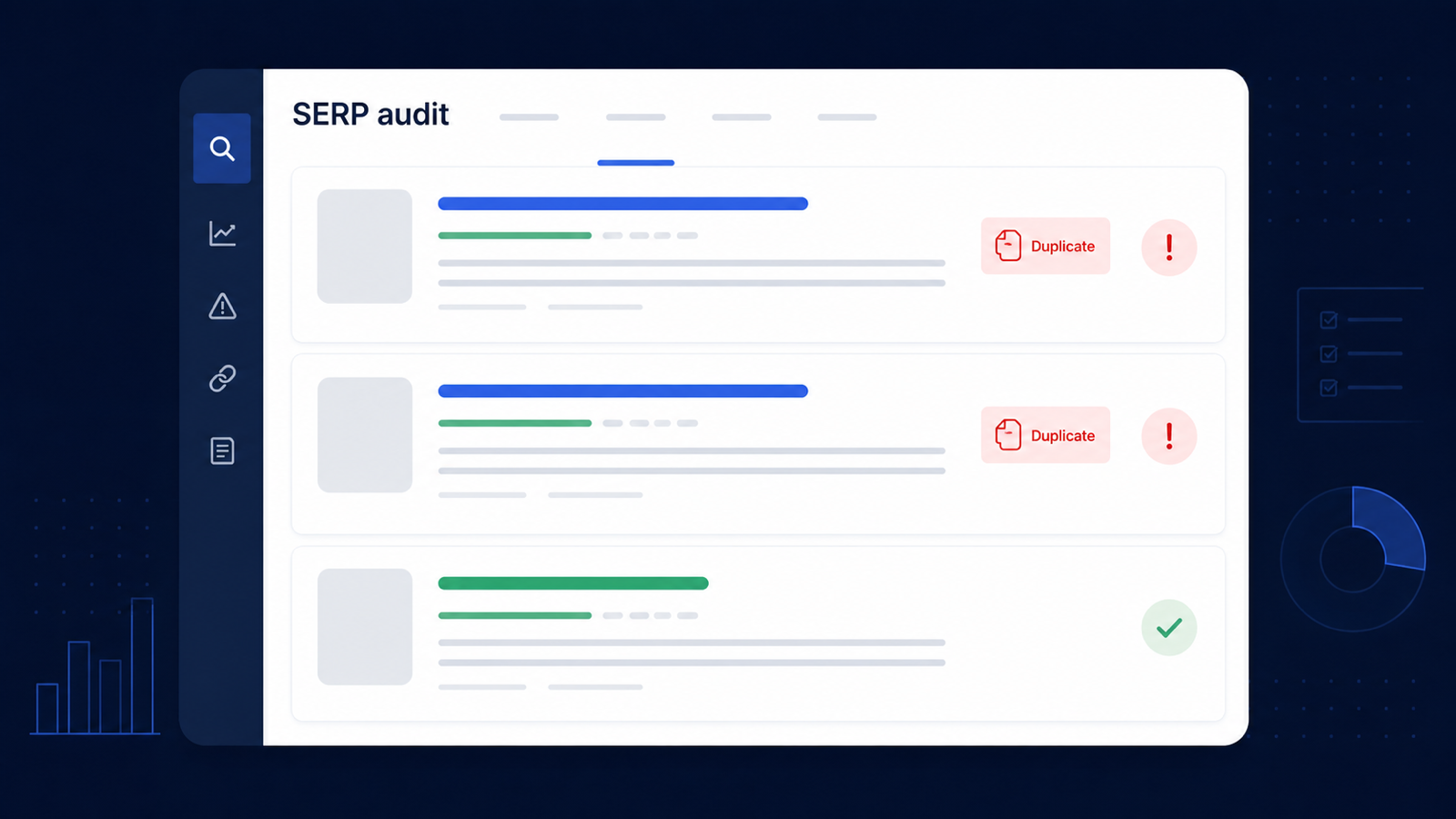
Title tags are still the single highest-impact on-page element. Duplicates cause cannibalization, missing titles get auto-generated by Google rarely well, and over-long titles get truncated in SERPs. A clean title inventory is the cheapest CTR uplift you can buy in 2026.
Step 1. Crawl with title extraction
Run a crawl in Site → Crawling Iterations with the parser enabled and Extract: title checked (default). Every parsed URL stores its title for filtering and grouping.
Step 2. Three filters that surface most of the problems
- Missing titles:
title IS EMPTY— typically caused by templates without a fallback. - Duplicate titles: group by title, filter
count > 1— direct cannibalization signal. - Truncated titles:
title length > 60— Google's pixel limit is roughly 580px, about 60 characters on average.
Step 3. Prioritize by traffic, not by count
Connect GSC and sort the duplicate-title clusters by impressions or sessions. The top ten cannibalized titles often drive eighty percent of the impact. Export to XLSX with columns: URL, title, length, duplicate group, impressions.
Step 4. Lock titles to prevent regression
Add commercially critical pages to Tracked URLs with Field tracking: title. The moment a CMS update breaks a title — for example, publishing "Untitled Page" — you get a Telegram alert and a snapshot diff.
Three patterns that produce silent duplicates
- Brand-suffix-only variation — every page ending in | Acme looks unique to your CMS but generic to Google; vary the prefix.
- Pagination duplicates —
?page=2re-using the page-1 title is the most frequent source of false-positive duplicates; append "— Page 2". - Filter URL titles — color and size facet URLs sharing the parent title; either noindex facets or template-vary the title.
Title length guidance for 2026
Practical bounds across desktop and mobile SERPs are 50–60 characters. Below 30 characters the title is almost certainly under-optimized. Above 60 characters the trailing portion gets truncated, hiding your primary keyword or call to action. Google rewrites about sixty percent of titles on commercial queries, but precise query-matching titles still outperform generic ones in the majority of cases.
Use the free SEO page audit to validate a single URL, or run a project crawl for a full-site title inventory.