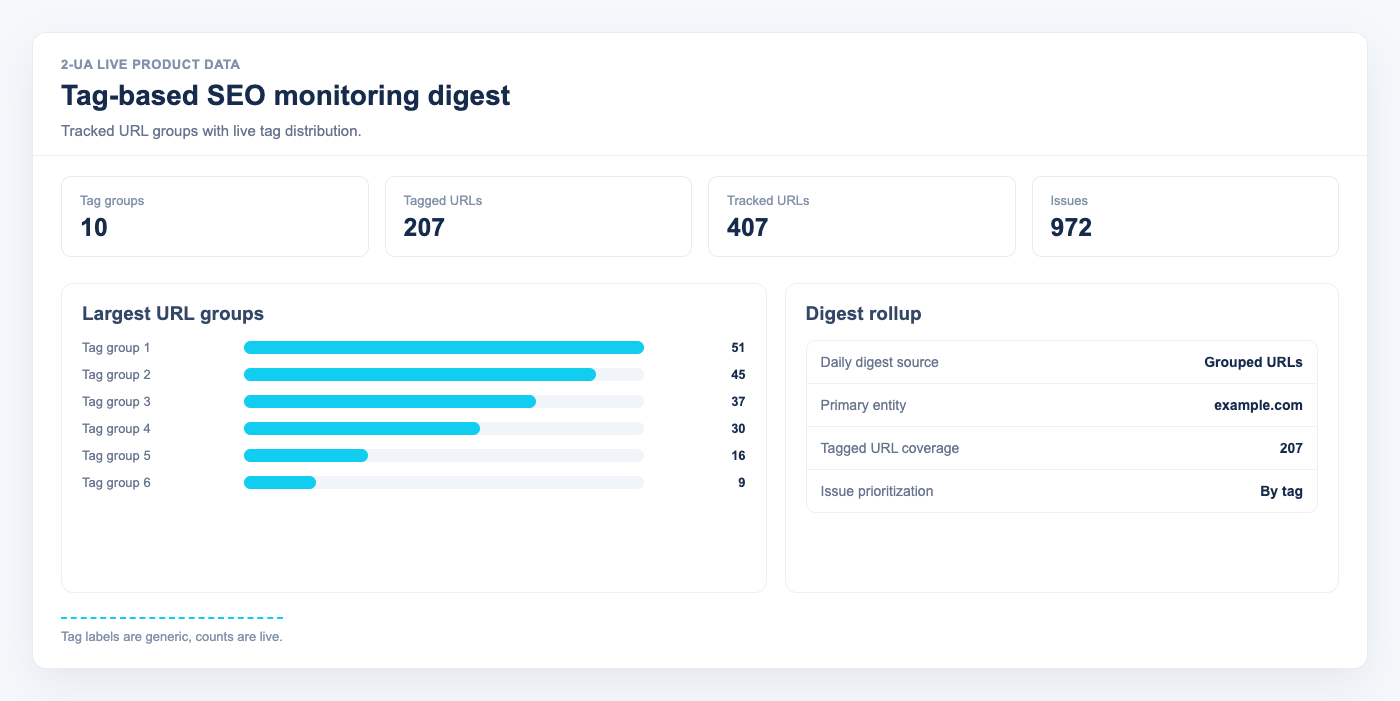
If you monitor hundreds or thousands of URLs, ungrouped data becomes operational noise. Tagging is the difference between “we have data” and “we can act today.”
How tags improve SEO operations
- Group by template type: product, category, blog, docs, location pages.
- Group by ownership: content team, growth team, platform team, client account.
- Group by business criticality: revenue pages vs support pages.
Weekly digest by tag
A tag-grouped digest lets teams consume one update that already matches their scope. Instead of reading site-wide metrics only, you can review performance and quality trends per tag. This is especially useful for agencies and in-house teams managing mixed page types.
Recommended structure for fast triage
- Create 5 to 12 durable tags tied to how your team works today.
- Avoid one-off tags for temporary campaigns unless you need short-term reporting.
- Keep tag names business-readable so non-SEO stakeholders understand updates.
- Review digest anomalies first, then drill down into page-level details.
When done correctly, tags become your monitoring backbone: cleaner alerts, faster incident routing, and better weekly reporting.