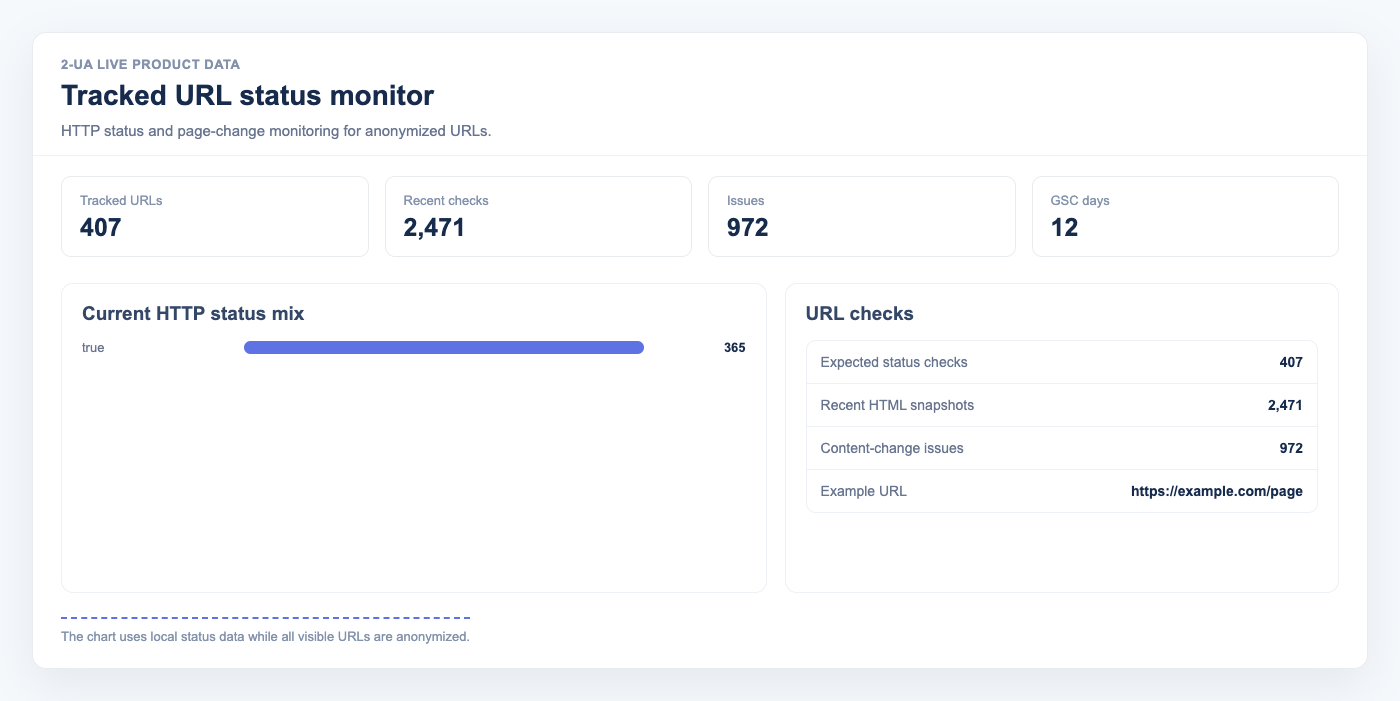
Technical SEO damage often starts on a small set of high-value pages: category hubs, conversion landings, and canonical destination URLs. Tracked URL monitoring protects those pages continuously.
What to monitor on each critical URL
- Expected HTTP status code (for example 200, 301, 302, 307).
- Expected redirect destination for redirect statuses.
- Response time drift over time.
- HTML and key on-page element changes.
Why expected status matters
Most teams detect outages, but miss logic errors: a page that should remain 200 suddenly becomes 302, or a 301 points to the wrong destination. These are silent SEO leaks that can persist for weeks.
Operational best practices
- Track templates, not random URLs. Focus on pages that represent site-wide patterns.
- Use bulk operations when adding or updating large URL sets.
- Apply tags during setup so alerts and digest views stay organized.
- Review daily changes in context of business priority, not just by timestamp.
This model is especially useful after migrations, CMS updates, CDN rule changes, and A/B infrastructure experiments. For onboarding steps, see the Tracked URLs FAQ section.