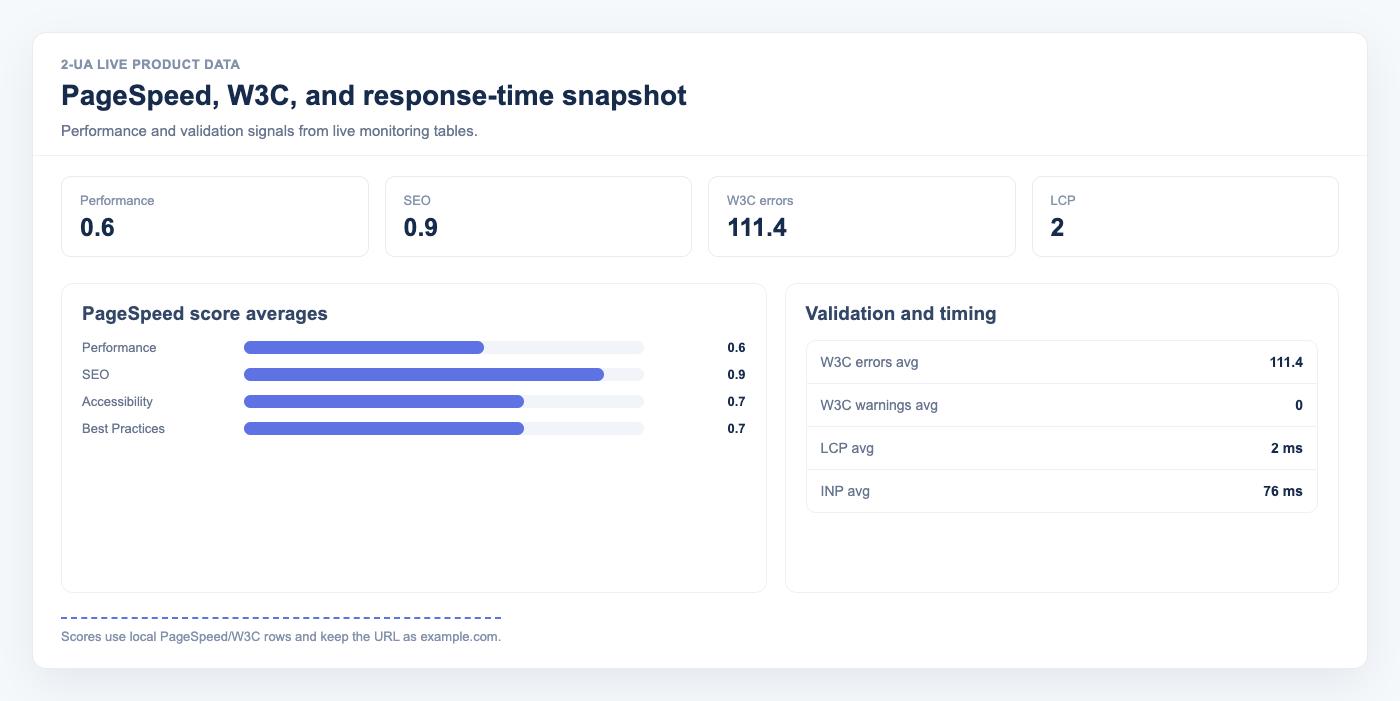
SEO quality is not only about crawlability and metadata. Performance stability and markup quality influence user experience, render consistency, and long-term visibility.
Three complementary monitoring layers
- Response time trends: p75 tracking for desktop and mobile contexts.
- PageSpeed metrics: performance score and web-vitals-oriented indicators over time.
- W3C validation: recurring checks for markup integrity and standards alignment.
Where teams usually make mistakes
- Looking only at single test runs instead of trend lines.
- Monitoring homepage performance but ignoring high-impact templates.
- Treating validation issues as “nice to have” until they become rendering bugs.
Operational model that works
- Track metrics by tag to isolate template-level movement.
- Use weekly digest trends for quick anomaly detection.
- Escalate sustained regressions, not one-off outliers.
- Pair performance and markup checks with crawl-based indexation diagnostics.
This combined model produces more stable technical SEO outcomes than isolated one-tool checks.