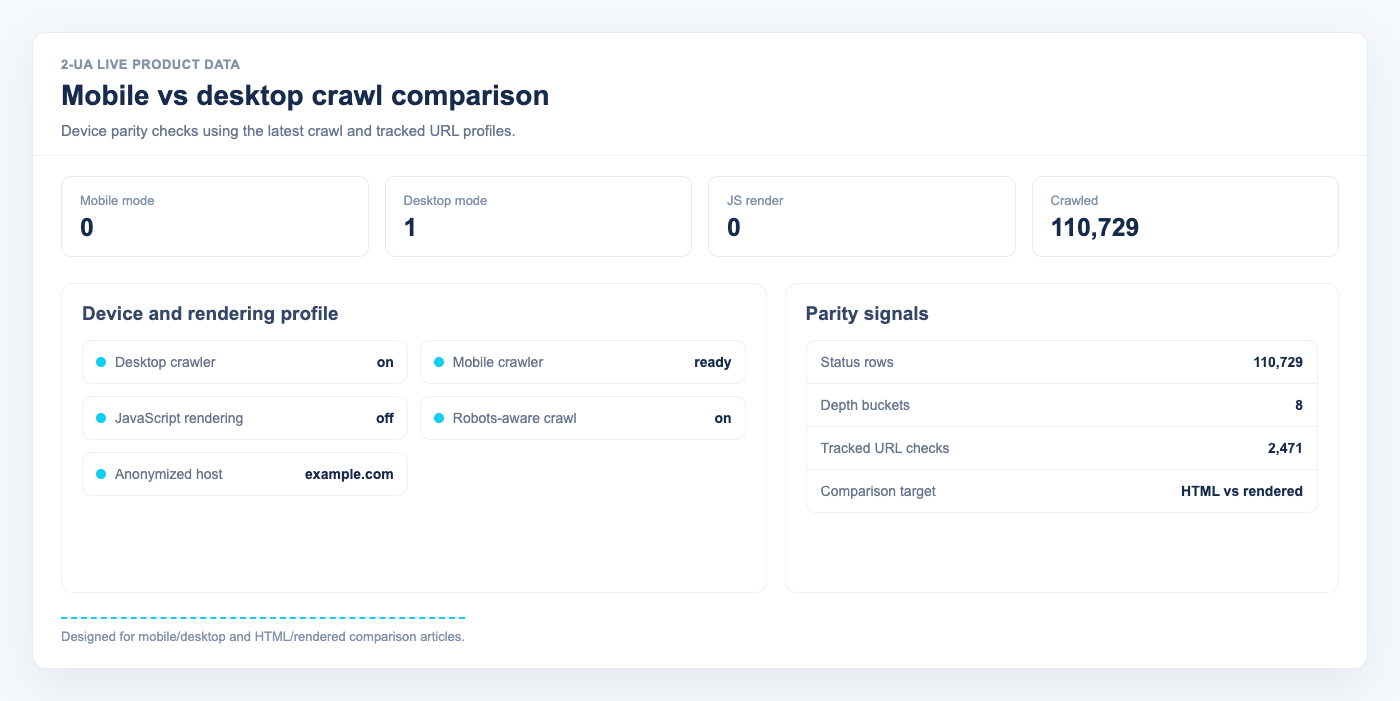
Search engines evaluate mobile rendering quality and content parity more strictly than ever. If your desktop and mobile versions diverge, you can lose rankings without obvious errors in standard reports.
What to compare
- Presence and consistency of title, H1, and key metadata fields.
- Indexation-critical directives (canonical, robots, hreflang).
- Internal link density and depth behavior.
- Rendered output differences when JavaScript execution is enabled.
High-impact comparison scenarios
- Framework or hydration changes after front-end releases.
- Adaptive templates where mobile hides or delays primary content blocks.
- Dynamic metadata generation that behaves differently by device profile.
Execution sequence
- Run a baseline desktop crawl.
- Run a matching mobile crawl with the same scope and constraints.
- Compare anomalies by template clusters, not by isolated URLs.
- Fix root causes in shared rendering logic and validate with a re-crawl.
This workflow is one of the fastest ways to catch hidden rendering regressions before they affect indexation and traffic.