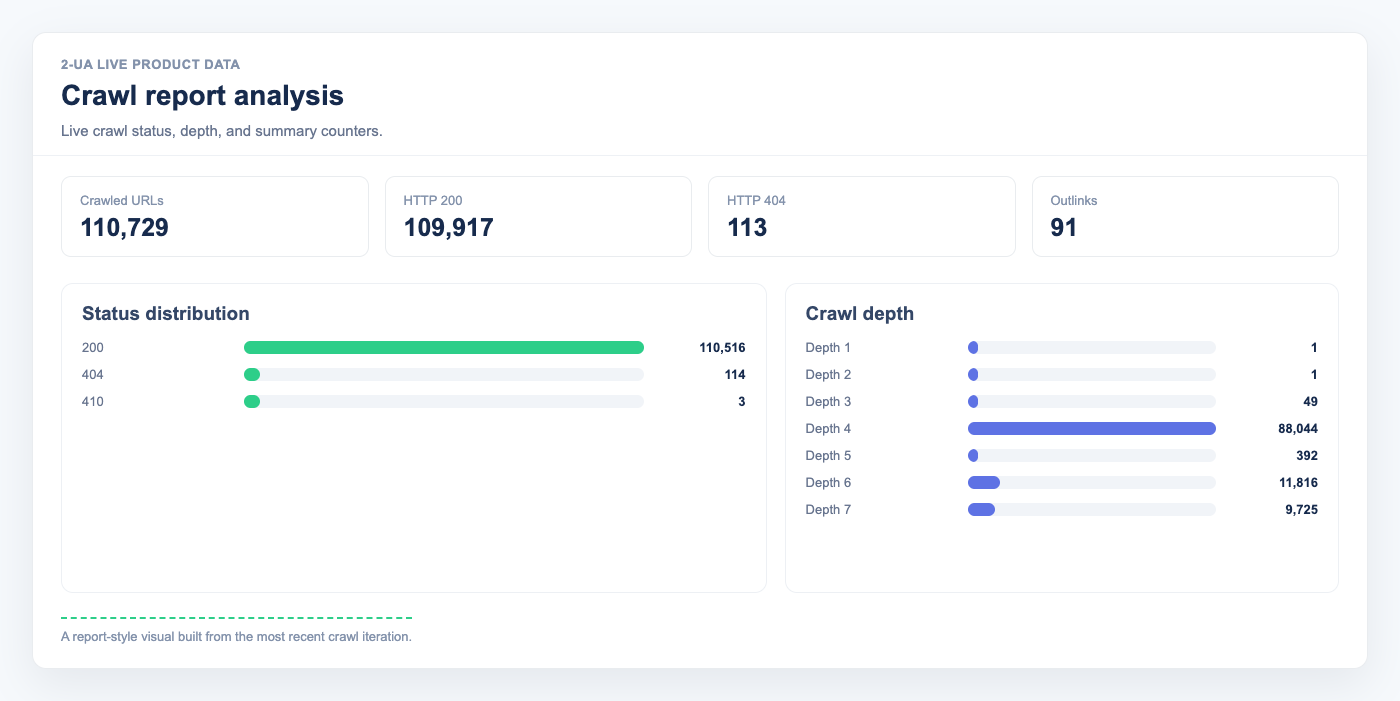
A crawl report is useful only when you can segment it quickly. Operator-based filtering helps you move from “interesting data” to “next action.”
How to read crawl data efficiently
- Start with status and depth distribution to detect structural outliers.
- Segment by page types or tags before interpreting isolated issues.
- Review duplicate metadata and heading inconsistencies in template groups.
- Validate canonical, robots, hreflang, and social tags where relevant.
Operator-driven triage workflow
- Filter to a high-priority segment (for example category pages).
- Apply one condition at a time (status, field patterns, missing values).
- Export or assign fixes by issue family, not by individual URL.
- Re-crawl and compare to validate that the issue class is resolved.
Why this improves team velocity
Engineers and content teams need grouped, reproducible tasks. Operators let you convert crawl findings into batches with clear acceptance criteria. That is what turns SEO audits into implementation, especially in sprint-based teams.
For crawl setup and report navigation basics, use the crawling documentation as a companion reference.